
Building an AI Virtual Teaching Assistant
It all begins with an idea.
From a non-Coding Perspective
Formative assessment is one of the most valuable things I do as a teacher, those low-stakes checkpoints that help students figure out what they know before it counts. The feedback part is what breaks it. I currently teach roughly 120 students at the Cégep level in Montreal, and giving each one of them meaningful, personalized comments on handwritten exam-style questions isn't just time-consuming, it's basically impossible while maintaining a work-life balance.
So I decided to try something.
One evening, I sat down with Claude (Anthropic's AI) and just described what I needed, in plain language. No coding. No technical background. Just a conversation about a problem I wanted to solve. Three hours later, I had Alix.
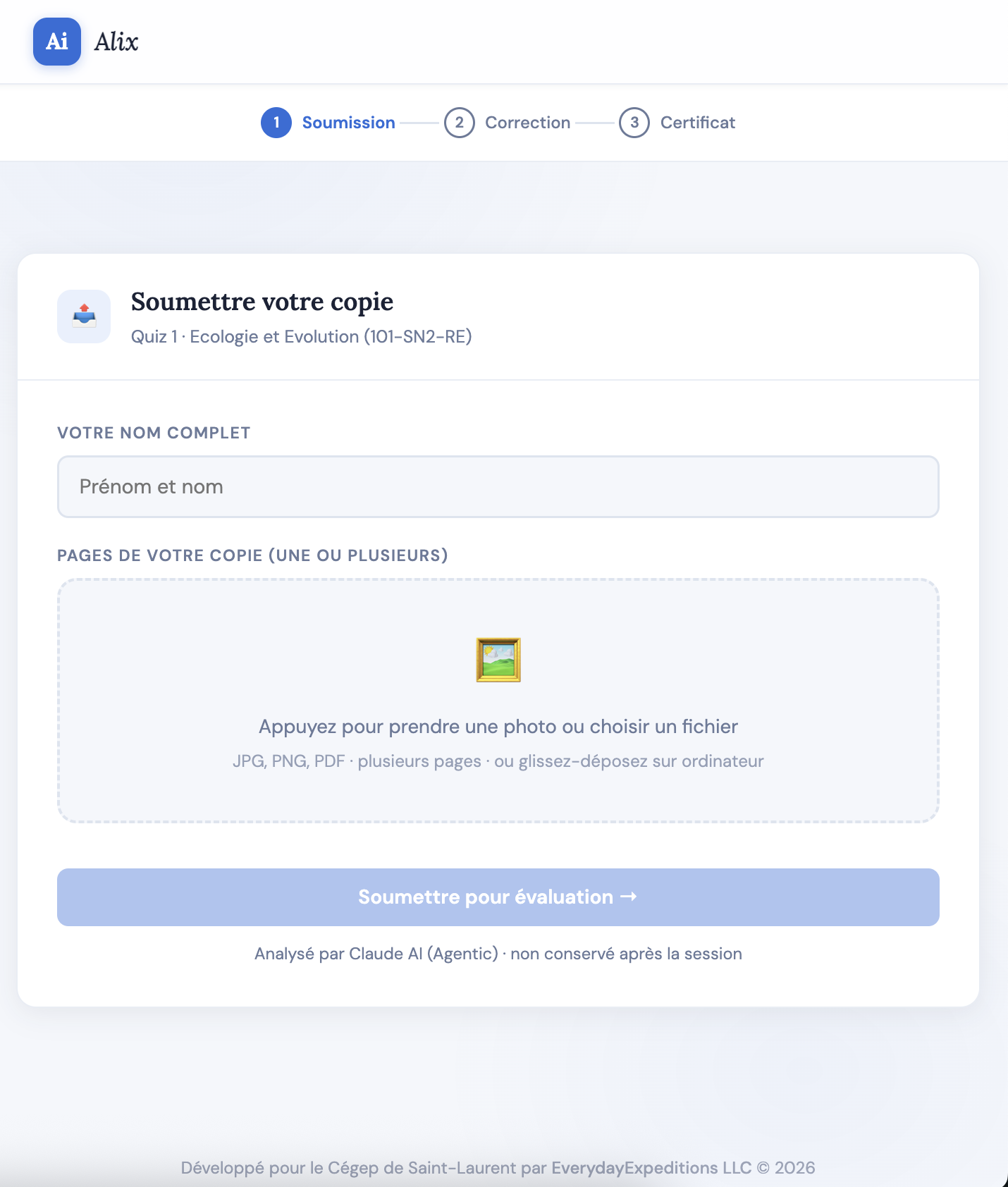
Alix is an AI-powered correction tool built specifically for my students. I named it Alix: gender-neutral, approachable, and bilingual, since I teach in French. Students photograph their handwritten work, upload it, and within about 30 seconds they get structured, personalized feedback on every question: what they got right, what they missed, and what to revisit. It flags blank answers differently from wrong ones. When they're done reviewing, they download a certificate confirming their engagement, which they send my way to get credit for the prep work. It works on mobile and desktop.
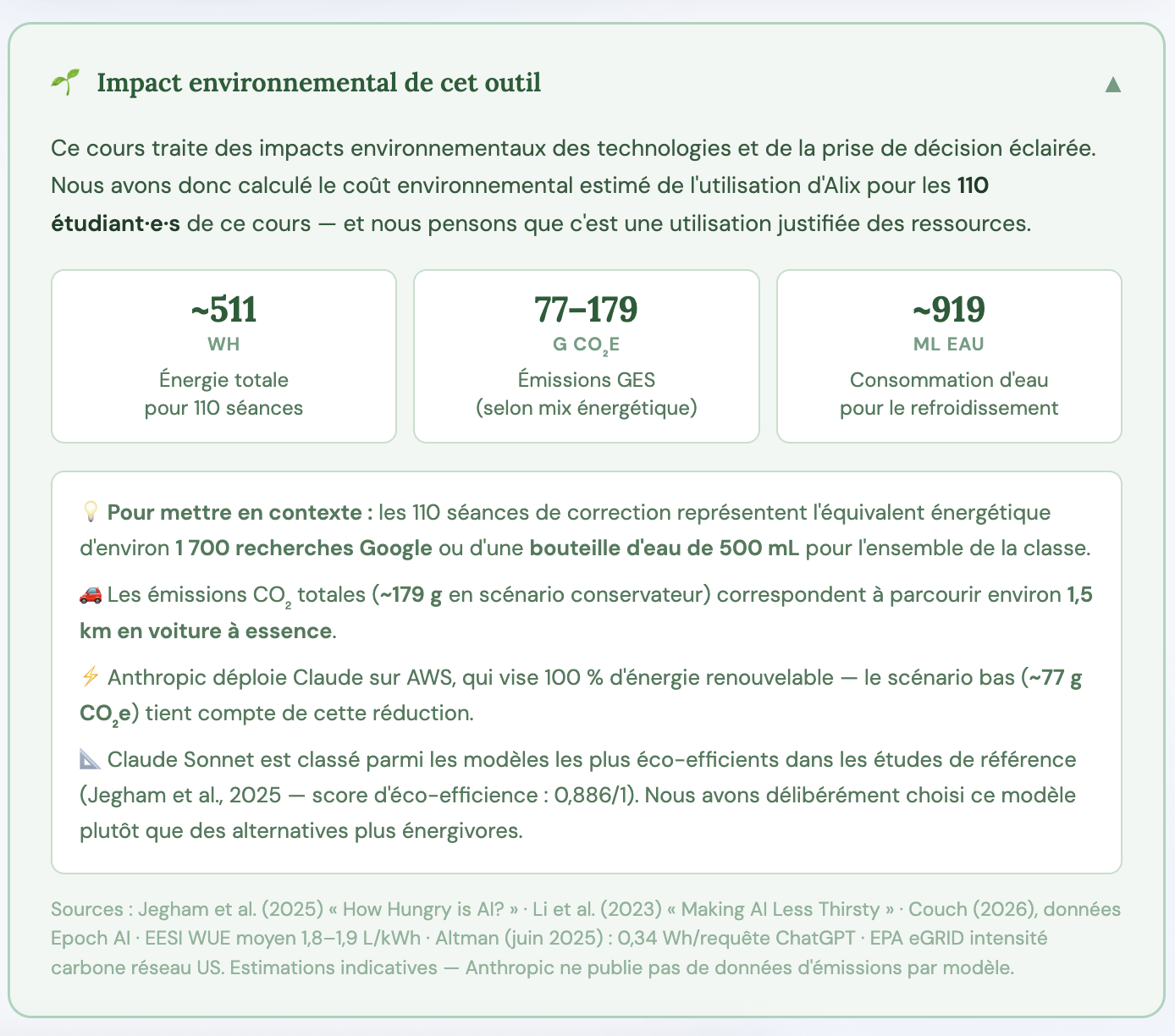
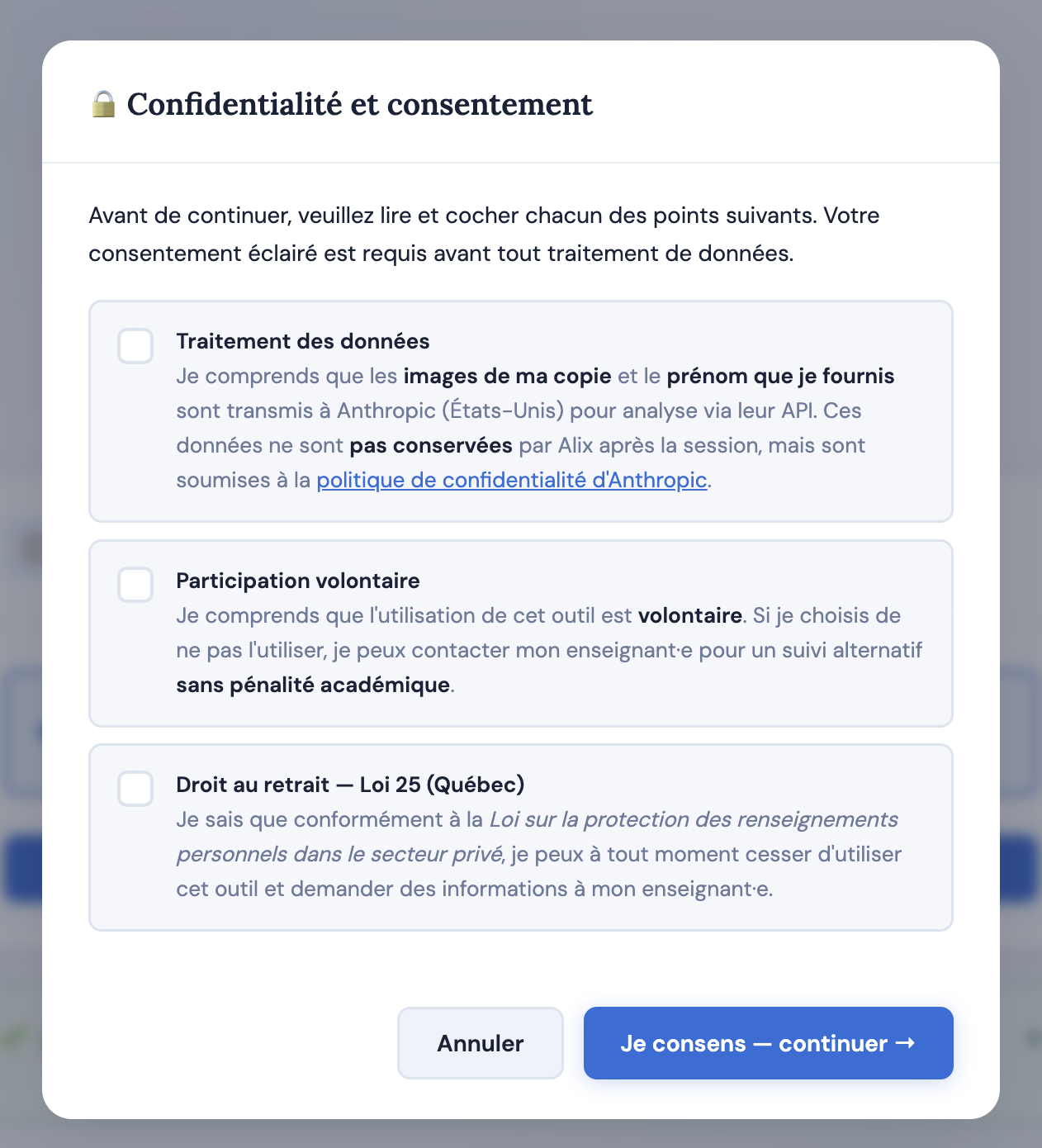
Before rolling it out, I thought carefully about two things that matter to me as an educator. First, student privacy: the tool includes a consent screen before any submission, clearly disclosing that a third-party AI processes the work, with a direct link to Anthropic's privacy policy. My students are all over 18, and this approach aligns with Quebec's Law 25 requirements. Second, environmental cost: running AI inference has a real carbon footprint. I decided the tradeoff was worth it — students get personalized feedback to help them prepare for a summative exam worth 30% of their grade — but I wanted that decision to be visible rather than invisible, particularly since this is an Ecology class where the environmental impact of our choices is part of what we discuss.
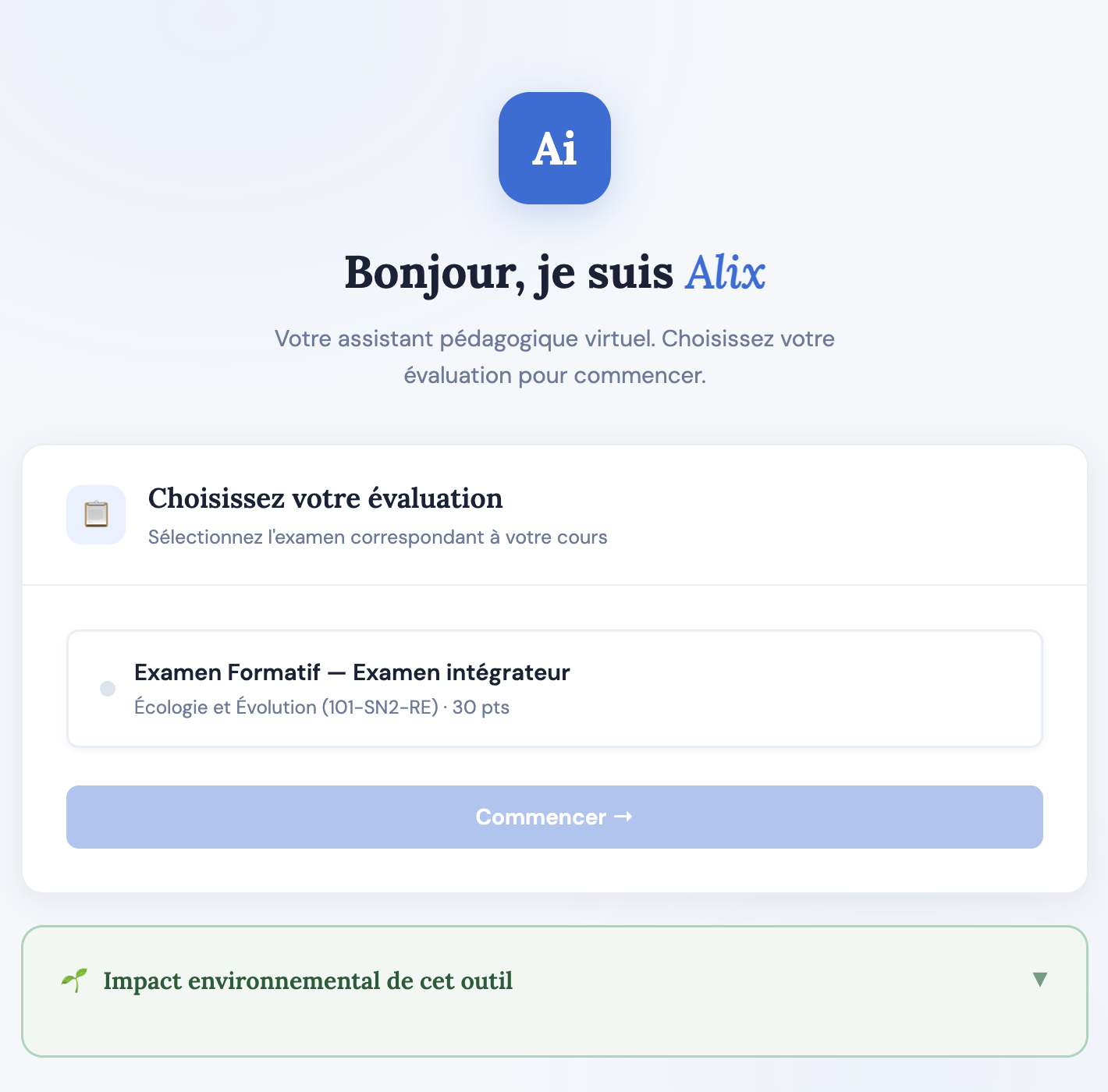
It took one evening to build and costs roughly $0.25 per student to run using the Anthropic Claude Sonnet 4.6 API. I was surprised by how supported the process felt and how much I learned by building it. The next step is to get students to try it out, and then come to class ready for a real discussion.